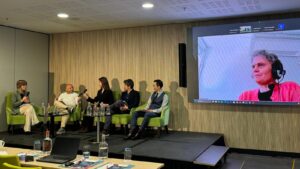

THOR participated at the final event of the FASTEST project, held on 20 May 2026 in Brussels, an event that marked the conclusion of three years of research and innovation dedicated to next-generation battery testing.
As part of the dedicated TwinBATT cluster session, Marion Chandesris from partner CEA contributed to the discussion on how digitalisation can accelerate battery development while improving reliability, safety, and industrial competitiveness. During the panel discussion, she and other invited experts highlighted that the main competitive advantages offered by digitalised battery testing are speed and cost reduction, explaining that modelling and digital tools can help narrow down possible configurations and identify the most relevant experiments, ultimately generating “more value from fewer tests.”
The discussion also included the importance of interoperability and modularity between digital tools, databases, AI-based approaches, and multi-physics models, identifying these aspects as essential to enabling wider industrial adoption.
Another key topic discussed during the panel was trust in virtual testing methodologies. According to Dr Chandesris, building confidence in digital twins and simulations will require realistic benchmarking approaches, traceable validation data, and a clear understanding of both the capabilities and limitations of virtual testing for complex multi-physics battery systems.
The event provided an important opportunity for THOR to strengthen collaboration with sister projects within the TwinBATT ecosystem and contribute to the ongoing European discussion on the future of digital battery validation, standardisation, and industrial uptake.